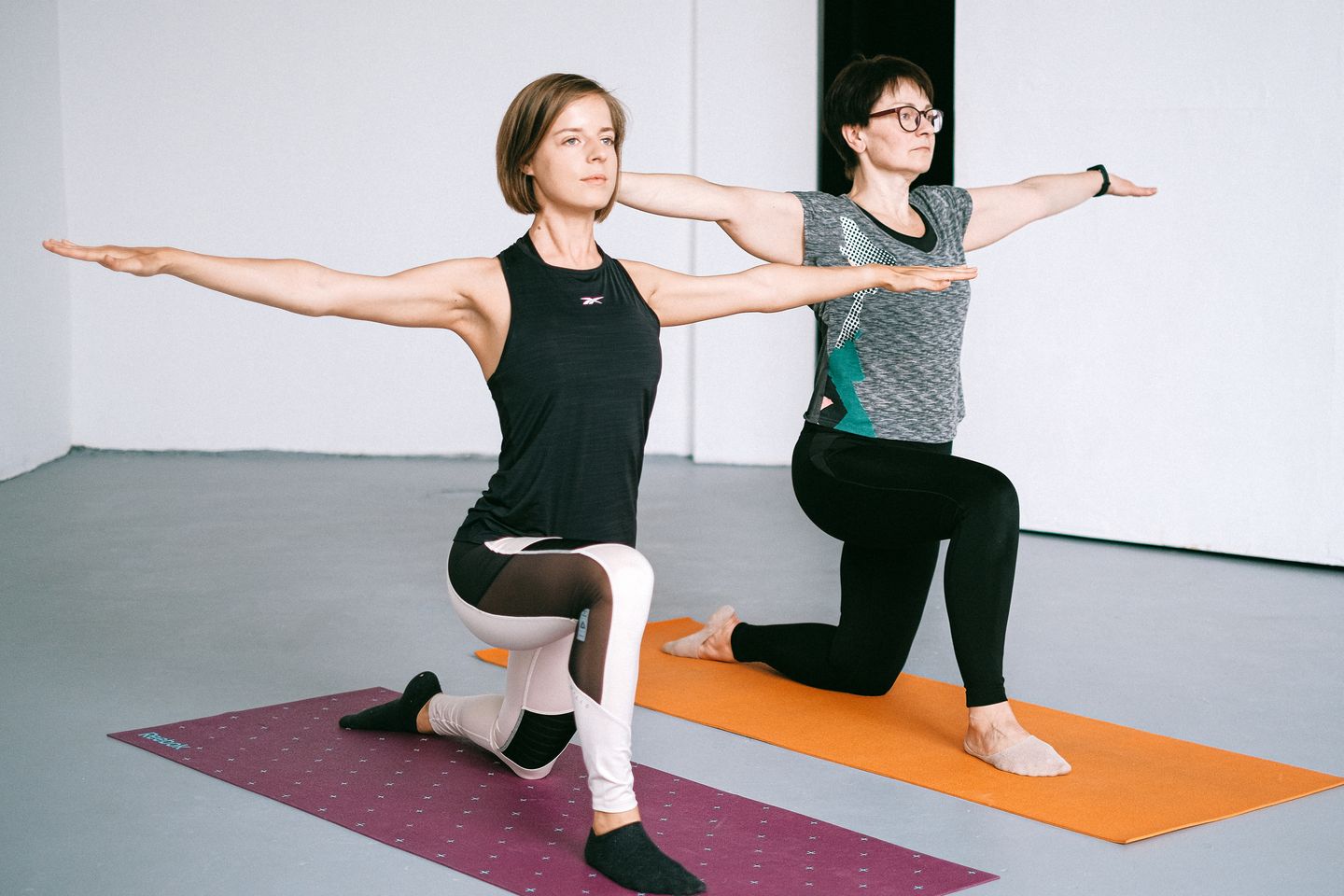
Choose one level for the session
Begin by deciding whether the sequence will be seated, standing, or floor-based. Keeping one level can make the order easier to understand and reduce setup changes. Choose a level that is comfortable to enter and leave, then check that the room offers enough clear space for your intended movements.
You do not need to include every kind of position for the sequence to be complete. A standing plan might contain an easy stance and one supported action, while a seated plan can remain in the same chair throughout. The useful foundation is a convenient arrangement you can use without complicated transitions.
Give the beginning a clear purpose
Use the first part to settle into your chosen base and check the setup. You might stand comfortably with a hand supported or sit with both feet resting steadily. Allow breathing to remain natural. The beginning gives you a chance to decide whether the position and the plan still feel workable.
Add one small introductory action if you like, such as turning the palms or lifting a heel while seated. Keep it easy enough that you can stop after this part. A sequence should not make you feel committed to its later sections merely because you have completed the first movement.
Select one central exploration
Choose a movement you understand, such as a modest supported hip hinge or a small change in seated posture. Try it once and return to your base. The central part does not need to be the hardest action; it is simply the idea you wanted to give a little more attention today.
You can repeat, adjust, or replace the action after the first attempt. If the setup becomes awkward, return to the initial position and reconsider. Avoid adding new poses only to fill time. A small sequence becomes clearer when each action has a practical place and remains easy to leave out.
Make the finish straightforward
End in a familiar position where you can rest briefly and decide what comes next. For a standing session, that may be a comfortable seat nearby. For a seated session, it may be simply returning the hands to the lap. A clear ending does not require a special closing pose or breathing exercise.
Review convenience: a useful base, an understandable action, and an easy finish. Adjust one detail next time if needed. This simple structure leaves room for personal choice.
A few common questions
How many poses make a sequence?
A few actions can be enough.
Must the middle section be demanding?
No. It can be a modest movement you want to explore.
Published by the Yogamila journal.